← All case studies
Evolutionary Computing · metaheuristics
Particle Swarm Optimization on Rastrigin
Tuning swarm dynamics on a notoriously multimodal benchmark to reach the global optimum far faster, and validating it rather than trusting a single lucky run.
173 → 16
iterations to converge
0
fewer iterations
0
benchmarks (Rastrigin, Rosenbrock)
multi-run
validated with statistics
The problem
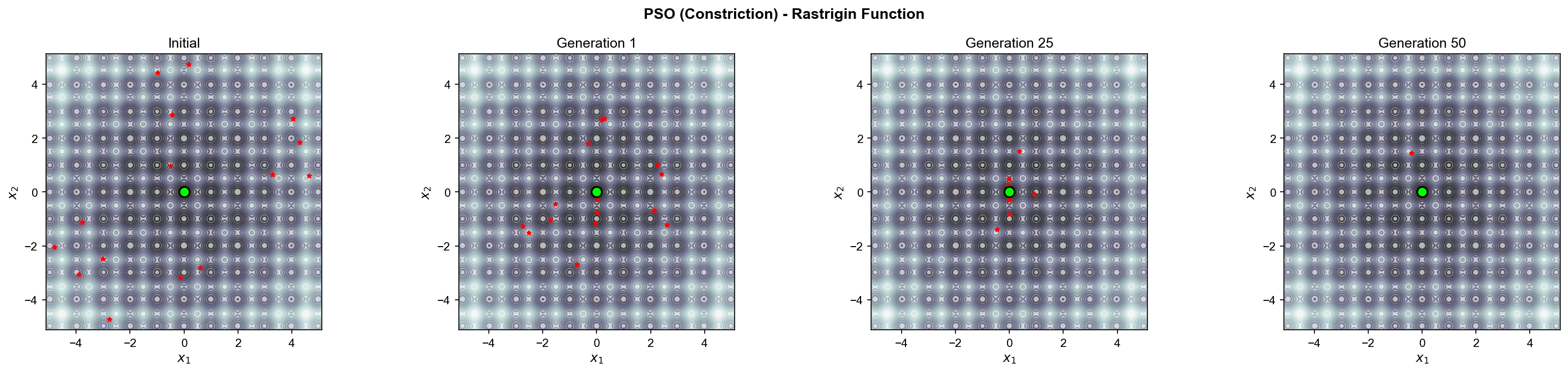
The Rastrigin function is a classic optimization trap: a smooth global bowl studded with dozens of regular local minima. Naïve optimizers get stuck in the nearest dip. The task was to make Particle Swarm Optimization escape them reliably, and quickly.
Approach
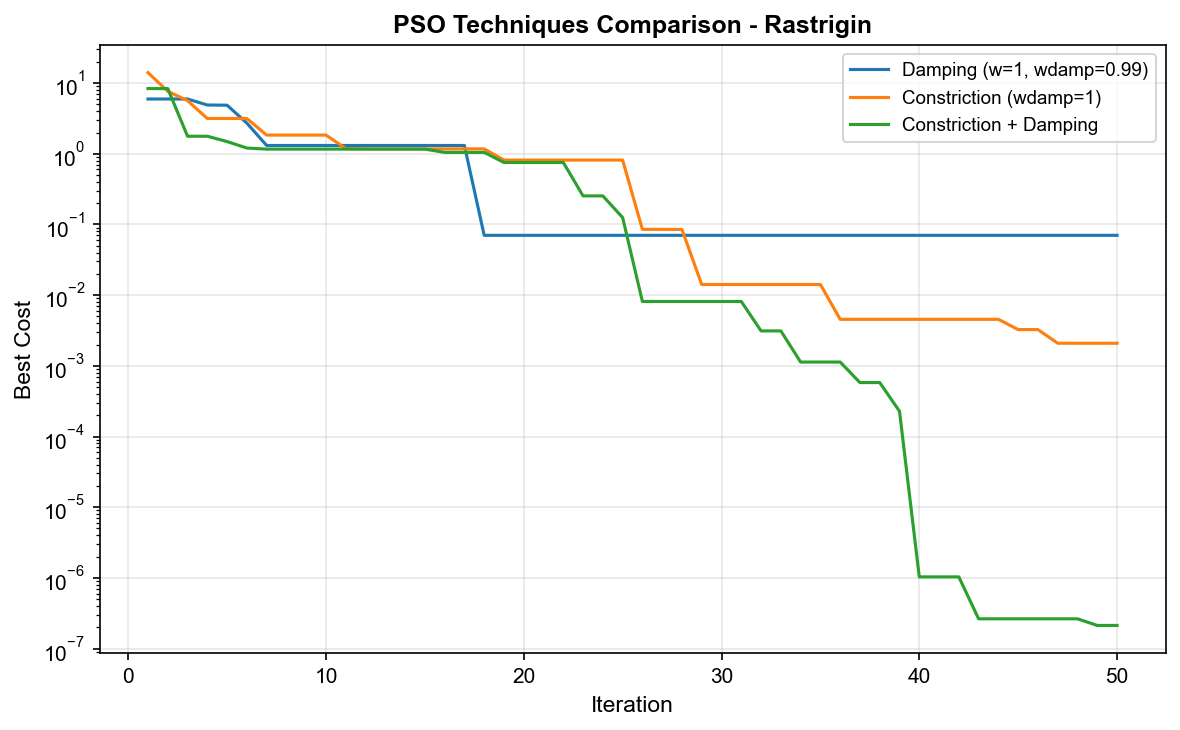
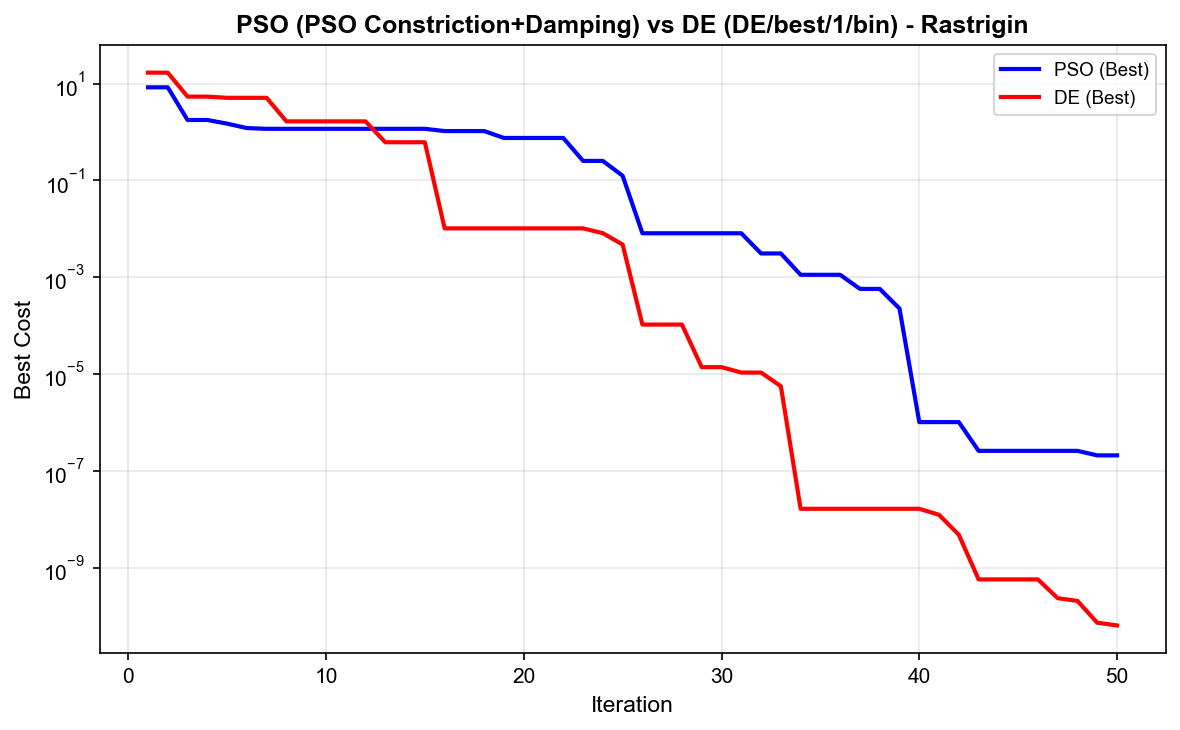
- Implemented PSO with constriction and inertia-damping variants, plus Differential Evolution as a cross-check.
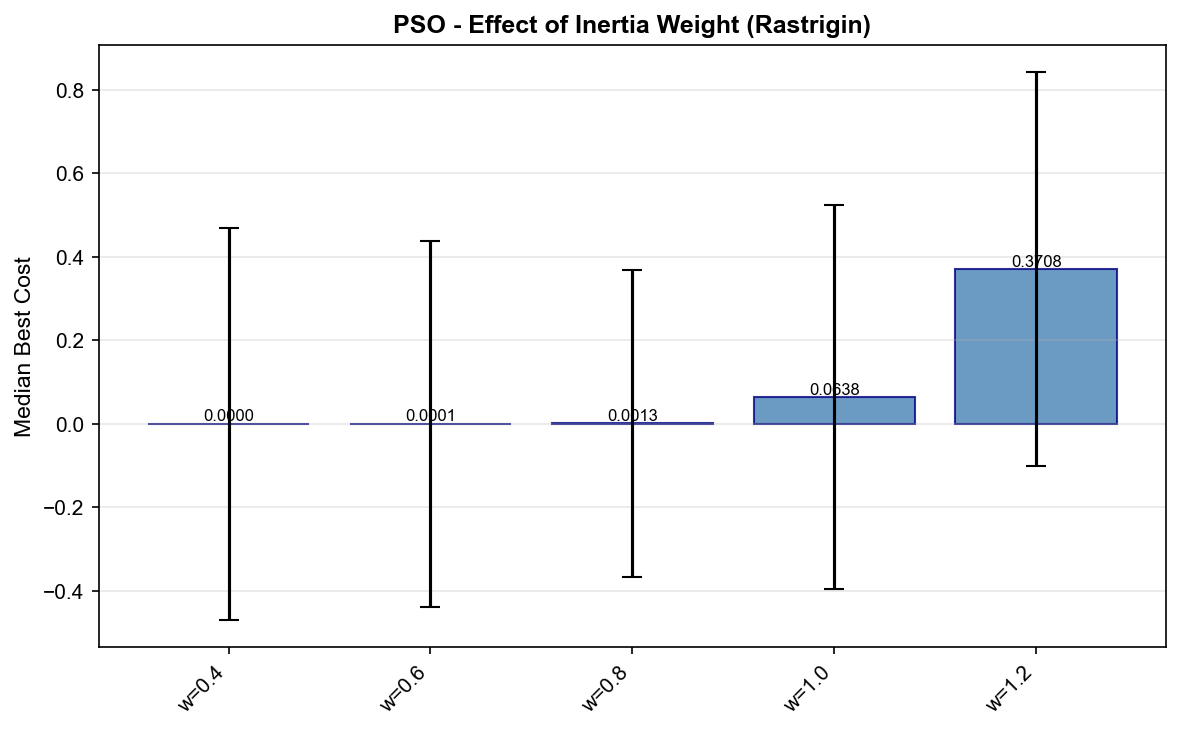
- Ran systematic parameter sweeps over inertia weight, the cognitive/social coefficients (c1, c2), population size and iteration budget.
- Validated convergence across multiple runs with summary statistics, not a single seed.
Results
Tuned inertia damping plus a well-chosen population let the swarm converge in 16 iterations instead of 173, a 90.8% reduction, while still reaching the global optimum. The sweeps showed inertia weight as the dominant lever: too high and the swarm never settles, too low and it stalls in a local minimum.
What I took away
- Metaheuristic performance lives in the hyperparameters, sweep them, don't guess them.
- Report convergence over multiple runs; a single run hides variance and luck.
- A second algorithm (DE) is a cheap sanity check on whether a result is real.