Notes on honest evaluation
Short write-ups on the part of machine learning that doesn't fit in a leaderboard: leakage, baselines, and why a good number is usually wrong until proven otherwise.
Model Evaluation Versus Threat Research: What Gets Tested
Benchmarks measure capability on fixed tasks; threat research probes what a model could do in the hands of a determined, resourceful actor. They are not interchangeable.
20 Oct 2026 Read →
What Counts as a Large Language Model, Really
Large language model has become a marketing word as much as a technical one. Here is what the definition should hinge on, and why the wiki version only gets you halfway.
19 Oct 2026 Read →
Computer Vision in Five Years: What Still Matters
Models and architectures will churn, but data discipline, evaluation rigour, and error analysis will still matter in five years. Here is what to actually invest in.
19 Oct 2026 Read →
Machine Learning Syllabi Compared: What Maps to a Job
Most ML courses teach models first and evaluation last. Real jobs run the other way round. Here is where the gap bites.
18 Oct 2026 Read →
What an Internship Teaches That a Course Cannot
Courses optimise for clean data and clean metrics. Internships force you to confront messy data, moving targets, and stakeholders, which is where real skill is built.
18 Oct 2026 Read →
Prompt Engineering Certificate or Portfolio: What Gets Checked
A certificate proves you sat through a course. A portfolio proves you can ship. Here is what hiring managers actually look at first.
17 Oct 2026 Read →
Computer Vision From Pixels to Predictions, One Example
How a handful of pixel values turns into a confident prediction, traced step by step through one small worked example.
17 Oct 2026 Read →
The ML Algorithms You Should Understand Before Any Library
Before you import scikit-learn or PyTorch, understand linear models, trees, and gradient descent by hand. It changes how you debug.
16 Oct 2026 Read →
Data Science Degree Versus Minor: What Each Prepares You For
A degree builds the judgement to design a pipeline from scratch; a minor builds the fluency to use one well. Neither is a shortcut to the other.
16 Oct 2026 Read →
Prompt Engineering Guide: Structuring One Prompt from Scratch
A practical walkthrough of building one prompt from a vague task to a reliable, testable instruction set.
15 Oct 2026 Read →
How to Evaluate a Machine Learning Definition Before Trusting It
A practical checklist for interrogating machine learning definitions before you let them shape your assumptions, your splits, or your conclusions.
15 Oct 2026 Read →
Computer Vision Jobs Decoded: What 'Entry Level' Really Means
'Entry level' in computer vision postings rarely means beginner. Here is how to decode the requirements and apply with confidence.
14 Oct 2026 Read →
ML Engineer Salary Bands Explained Through the Work
Forget the title. Salary bands in machine learning track the judgement required by the work, not years of experience or a label on a contract.
14 Oct 2026 Read →
What a Prompt Engineering Course Should Teach but Skips
Clever phrasing is easy to teach. Rigorous evaluation of prompts, under variance and leakage, is the part courses usually skip.
13 Oct 2026 Read →
Prompt Engineering Salary Claims: What the Job Actually Pays For
The eye-catching prompt engineer salary figures are really paying for evaluation, debugging and systems judgement, not magic phrasing.
13 Oct 2026 Read →
Common ML Algorithms Grouped by the Problem They Solve
A practical map of machine learning methods organised by the underlying problem they solve, not by buzzword or library.
12 Oct 2026 Read →
Prompt Engineering: What Survives a Model Change
A practical look at which prompting habits transfer across model versions, and which were just quirky workarounds that quietly stop working.
12 Oct 2026 Read →
What a Model Learns During Training, on One Example
A worked example showing exactly what changes, step by step, when a model trains, with no hand-waving about magic.
11 Oct 2026 Read →
RAG as Context Engineering: Where the Boundary Sits
RAG succeeds or fails on context engineering, not retrieval cleverness. Here is where the real boundary sits, and how to test it honestly.
11 Oct 2026 Read →
Choosing a Deep Learning Book in a Crowded Field
Most deep learning books fail not because they are wrong but because they are read at the wrong stage. Here is how to pick one that actually moves you forward.
10 Oct 2026 Read →
Deep Learning Versus Classical Statistics: The Real Overlap
Deep learning and classical statistics are often framed as rivals, but underneath the tooling they share the same core questions about bias, variance, and generalisation.
10 Oct 2026 Read →
Machine Learning Engineer Titles: What the Posting Really Wants
Same title, different job. Here is how to decode what a machine learning engineer posting is actually asking for before you apply.
9 Oct 2026 Read →
Context Windows Are Not the Same as Context Engineering
Bigger context windows do not fix bad retrieval. Here is why feeding a model the right information matters more than feeding it more.
9 Oct 2026 Read →
Prompt Engineering Certifications: What They Actually Certify
Most prompt engineering certificates test recall of technique names, not the measurable skill of improving outputs under real constraints.
8 Oct 2026 Read →
Why 'Fine-Tuning' Means Three Different Things
Fine-tuning can mean full retraining, LoRA-style adaptation, or just prompt steering. Mixing them up wastes compute and muddles your evaluation.
8 Oct 2026 Read →
Fine-Tuning in Cosmology and ML: One Word, Two Claims
The word 'fine-tuning' means something precise in cosmology and something else entirely in ML. Mixing them up leads to sloppy arguments on both sides.
7 Oct 2026 Read →
Deep Learning Textbooks Compared: Goodfellow Revisited
Transformers aside, the Deep Learning textbook still explains the foundations, regularisation, and optimisation better than most modern alternatives.
7 Oct 2026 Read →
Machine Learning Definitions Compared: The Quiet Disagreements
Textbooks all quote similar definitions of machine learning, but look closely and they disagree on what counts as learning, generalisation, and experience.
6 Oct 2026 Read →
What Genetic Perturbation Models Teach Us About Deep Learning
Models that predict cellular response to gene perturbations look impressive until you check the splits. The lessons generalise far beyond biology.
6 Oct 2026 Read →
Context Engineering Versus Prompt Engineering: What Changed
Prompt wording still matters, but the real leverage moved to what you retrieve, structure, and feed a model before it answers.
5 Oct 2026 Read →
Choosing a First NLP Project That Actually Teaches You Something
Skip the chatbot clone. A simple classifier, built with care, teaches tokenisation, embeddings, and evaluation far better.
5 Oct 2026 Read →
What a Fine-Tuning Run Actually Costs
GPU hours are the visible cost of fine-tuning. Data curation and honest evaluation are the invisible costs that decide whether the run was worth it.
4 Oct 2026 Read →
Evaluating a Model Against Its Own Baseline, Not Just the Leaderboard
Beating the leaderboard means little if your model cannot beat a trivial baseline built from its own inputs. Here is why that comparison matters.
4 Oct 2026 Read →
Why Computer Vision and ML Engineers Read Papers Differently
Computer vision and general ML engineers scan the same paper for different red flags, shaped by different failure modes they have each been burned by.
3 Oct 2026 Read →
A Worked Example of Overfitting to the Leaderboard
Checking the leaderboard too often quietly turns your test set into training data. Here is a worked example showing exactly how.
3 Oct 2026 Read →
The Vocabulary Trap in ML Job Adverts
ML job titles like NLP Engineer, CV Engineer, and MLOps Engineer look distinct on paper, but the actual day-to-day skills overlap heavily once you look past the buzzwords.
2 Oct 2026 Read →
Building a Threat-Aware Evaluation Harness, Sensibly
Most evaluation harnesses test for competence, not failure. Borrowing a few habits from red-team thinking fixes that, without needing a security team.
2 Oct 2026 Read →
Model Evaluation as a Discipline: Metric Versus Decision
Accuracy is a number. Deployment is a decision. This post explains the discipline that separates the two, with a worked example.
1 Oct 2026 Read →
Held-Out Evaluation for Recommenders: When Offline Lies
High offline NDCG does not guarantee happy users. A walk through why held-out splits mislead recommender evaluation and how to close the gap.
1 Oct 2026 Read →
Computer Vision Book or Course: What Each One Teaches
A book gives you the mathematics and the why; a course gives you the workflow and the muscle memory. Most learners need both, in the right order.
30 Sep 2026 Read →
Data Annotation Quality: Your Labels Are the Real Model
Model architecture gets the glory, but in NLP the annotation guidelines and inter-annotator agreement quietly decide your ceiling. Here is why that ceiling is usually lower than you think.
30 Sep 2026 Read →
What Counts as an NLP Practitioner Before Deep Learning
Deep learning did not invent NLP; it rebranded a field that already had decades of rigorous, rule-based practice worth remembering.
29 Sep 2026 Read →
Full Fine-Tuning vs PEFT: A Decision Framework, Not a Trend
LoRA and its cousins are useful, not magic. Here is how to actually decide when full fine-tuning still earns its cost.
29 Sep 2026 Read →
Fine-Tuning as a Word: What Physics Lent Machine Learning
Machine learning didn't invent fine-tuning. It borrowed a loaded term from physics and cosmology, and the borrowing changes how we should think about it.
28 Sep 2026 Read →
Curriculum Learning: Ordering Training Data on Purpose
Most training pipelines shuffle data and hope. Curriculum learning asks what happens if you don't, and the answer is more nuanced than 'easy first, hard later'.
28 Sep 2026 Read →
Explaining a Model's Decision When Nobody Trusts the p-value
When a p-value fails to persuade, swap it for concrete numbers on money, customers, and risk. Here is how I do that in practice.
27 Sep 2026 Read →
Data Contracts for ML Pipelines: Catching Schema Drift Early
Schema drift breaks models silently. Data contracts catch it at the source, before it poisons training data or corrupts predictions in production.
27 Sep 2026 Read →
Multi-Modal Models Explained: Fusing Text and Image
A grounded look at how text and image models actually get fused, without the hand-waving about 'understanding'.
26 Sep 2026 Read →
Batch Size: The Quiet Hyperparameter Nobody Tunes
Batch size is treated as a memory afterthought, but it changes gradient noise, generalisation, and wall-clock time in ways learning rate alone cannot fix.
26 Sep 2026 Read →
Feature Engineering for Tabular Data: What Still Wins
On tabular data, careful feature engineering often beats a neural network. Here is the intuition, a worked example, and why leakage-aware evaluation matters more than architecture.
25 Sep 2026 Read →
Zero-Shot Classification: Promise Versus Practice
Zero-shot classification is genuinely useful, but its accuracy claims often collapse once you check for label leakage, prompt sensitivity, and domain mismatch.
25 Sep 2026 Read →
Exploration Versus Exploitation, Without the Slot Machine
Skip the casino metaphor. Here is the exploration versus exploitation tradeoff explained through a decision you have actually made.
24 Sep 2026 Read →
Synthetic Data for Vision: Closing the Domain Gap
Synthetic data can rescue a vision project starved of labels, but only when the gap between rendered and real pixels is measured, not assumed away.
24 Sep 2026 Read →
Active Learning: Choosing What to Label Next
Instead of labelling everything, active learning picks the examples most likely to improve your model, saving budget without sacrificing performance.
23 Sep 2026 Read →
Evaluating Recommenders: Accuracy Is the Wrong First Metric
A recommender can top the accuracy leaderboard and still be useless. Here is why offline accuracy metrics need company, not replacement.
23 Sep 2026 Read →
Class Imbalance Beyond Binary: Skewed Multi-Class Problems
Binary imbalance tricks do not simply generalise to multi-class problems. Here is how to think about skewed classes properly, with a worked example.
22 Sep 2026 Read →
Data Leakage in Time Series: Lag Features Need Care
Lag features feel safe because they look backwards, but sloppy construction lets future information leak in and inflates your validation scores.
22 Sep 2026 Read →
Hyperparameter Search: Grid, Random, and Bayesian, Honestly
Grid search is comfortable, random search is underrated, and Bayesian optimisation earns its complexity only sometimes. Here is the honest comparison.
21 Sep 2026 Read →
Explaining Transformers Without the Film Analogy Trap
Skip the film analogies. Here is how to explain transformers to non-technical people using a concrete weighted-vote example that actually holds up.
21 Sep 2026 Read →
What a Model Evaluation Framework Automates and Assumes
Evaluation frameworks automate splitting, scoring, and aggregation, but they quietly assume your data is independent, your split reflects deployment, and your metric means what you think.
20 Sep 2026 Read →
How to Shortlist MLOps Tools Without Chasing Every Release
A practical filter for choosing MLOps tools on a small team, so you stop re-evaluating your stack every time something new trends.
20 Sep 2026 Read →
Data Science Salary Bands Explained by Skill
Salary bands in data science track judgement under uncertainty, not tool familiarity. Here is the skill ladder that actually explains the pay gap.
19 Sep 2026 Read →
Building a Personal MLOps Toolkit Before Paying for a Platform
Managed MLOps platforms solve real problems, but most of those problems can be handled first with free tools, discipline, and a bit of scripting.
19 Sep 2026 Read →
Why Extreme Risk Evaluation Needs More Than a Test Set
Held-out accuracy answers a narrow question. For rare, high-consequence failures, you need adversarial probing, distribution shift tests, and honest uncertainty, not just a leaderboard score.
18 Sep 2026 Read →
Evaluation Metrics: Interview Talk vs What You Actually Compute
Interviews want clean definitions of precision, recall and AUC. Real projects want you to know which one lies to you and when.
18 Sep 2026 Read →
The Gap Between a Data Science Internship Advert and the Job
The advert promises neural networks and predictive models. The job mostly delivers spreadsheets, missing values, and meetings about definitions.
17 Sep 2026 Read →
Choosing a Data Science Degree: What Maps to Real Work
Module lists promise a lot. Here is how to tell which ones actually build the skills data science jobs use every day.
17 Sep 2026 Read →
Why 'Transformer' Means Something Different in ML Papers
In electrical engineering a transformer changes voltage. In machine learning it changes how a model attends to context. Same word, unrelated ideas.
16 Sep 2026 Read →
A Realistic Weekly Breakdown of MLOps Work
Model training is the smallest part of the job. Here is the honest weekly rhythm of maintaining ML systems in production.
16 Sep 2026 Read →
When Evaluation Dashboards Hide Silent Model Failures
A clean accuracy chart on a managed ML dashboard can hide leakage, drift, and slice-level failures that only careful, manual evaluation will reveal.
15 Sep 2026 Read →
Reading an MLOps Certification Syllabus: Gaps and Gains
MLOps syllabuses teach you the pipeline plumbing well, but often skip the harder judgement calls around evaluation, drift, and leakage.
15 Sep 2026 Read →
Bootcamps vs Self-Taught Paths: What Portfolios Reveal
Bootcamp or self-taught, the credential says little. The portfolio, read carefully, says almost everything about how someone actually thinks.
14 Sep 2026 Read →
How to Read an Evaluation Section Like a Reviewer
Skip the leaderboard instinct. Learn to interrogate splits, baselines, and variance the way a careful reviewer does, not the way a skimmer does.
14 Sep 2026 Read →
Knowledge Distillation: Shrinking a Model Without Breaking It
Distillation can quietly shrink a model's failure modes into a smaller package. Here's how to check whether you've actually preserved behaviour, not just accuracy.
13 Sep 2026 Read →
Multi-Task Learning: When a Shared Backbone Helps or Hurts
A shared backbone sounds efficient, but it only pays off when tasks actually agree on what a good representation looks like.
13 Sep 2026 Read →
Warm Restarts and Why a Constant Learning Rate Rarely Wins
A constant learning rate forces a single compromise between speed and stability. Schedules, especially warm restarts, let you have both at different points in training.
12 Sep 2026 Read →
Weight Decay Versus Dropout: Different Jobs Entirely
Weight decay shrinks parameters towards zero; dropout forces redundancy across units. Treating them as interchangeable is a common and costly mistake.
12 Sep 2026 Read →
Regression Versus Classification: Framing Messy Problems
The real modelling decision often happens before training starts: is this a number to predict or a category to assign? Choose badly and you fight the problem forever.
11 Sep 2026 Read →
Data-Centric NLP: Clean Your Corpus Before the Model
A messy corpus quietly caps your model's ceiling. Here is a practical, leakage-aware approach to cleaning text data before you touch a single hyperparameter.
11 Sep 2026 Read →
Vision Transformers Explained from the Patch Embedding Upward
How a grid of pixels becomes a sequence a transformer can read, and why that single design choice explains almost everything else about ViTs.
10 Sep 2026 Read →
Explaining a Transformer's Attention Mechanism Simply
How I explain transformer attention to non-technical interviewers using a room full of conversations, not maths.
10 Sep 2026 Read →
What NLP Techniques Survive Contact With Small Data
Most NLP advice assumes thousands of labelled examples. Here is what genuinely works when you have a few hundred, and how to prove it honestly.
9 Sep 2026 Read →
LLM Arenas: Pairwise Preference Is Not Accuracy
Arena win rates measure relative preference, not correctness. Confusing the two can make a fluent, wrong model look like the best model.
9 Sep 2026 Read →
Degree, Course, or Portfolio: What Really Teaches Fine-Tuning
Degrees, courses, and portfolios each promise fine-tuning skills. Only one forces you to fail, debug, and rerun until the numbers hold up.
8 Sep 2026 Read →
LLM Benchmarks Decoded: What a Leaderboard Score Tests
A leaderboard score measures performance on one fixed test set under one prompting scheme. It is not a certificate of general intelligence.
8 Sep 2026 Read →
Fine-Tuning: One Word, Several Very Different Ideas
Fine-tuning sounds like a small tweak everywhere it's used, but in ML it can mean anything from adjusting a few layers to retraining a whole model. The distinction matters.
7 Sep 2026 Read →
Quantifying Uncertainty: The Confidence Intervals You Skip
A model's reported accuracy is a guess with error bars nobody drew. Here is how to draw them and why it changes conclusions.
7 Sep 2026 Read →
Picking a First Computer Vision Job: Lab vs Startup vs Team
Research lab, startup, or industry team: the right first CV job depends on what skill you want to compound, not on prestige.
6 Sep 2026 Read →
Data Science Job Adverts Decoded: What Years Signals
Job adverts treat years of experience as a precise filter, but it is a noisy proxy for skill. Here is how to read it properly.
6 Sep 2026 Read →
Model Evaluation for Safety-Critical Systems, Properly Done
Accuracy is not safety. Here is what disciplined, leakage-aware evaluation for safety-critical models actually checks, with a worked example.
5 Sep 2026 Read →
Why Your Evaluation Harness Matters More Than the Model
A better model trained on a leaky, noisy evaluation setup is worse than a mediocre model measured properly. Here is why the harness comes first.
5 Sep 2026 Read →
Fine-Tuning vs Retrieval for Knowledge-Heavy Small Projects
A practical guide to deciding whether a small, knowledge-heavy project needs fine-tuning, retrieval, or both, with a worked example and honest trade-offs.
4 Sep 2026 Read →
Computer Vision Papers: What Gets Published vs Deployed
Why the models that dominate computer vision conferences rarely match the ones that survive contact with real deployment constraints.
4 Sep 2026 Read →
Evaluating Fine-Tuned Models Against Their Base Model Fairly
Beating the base model on your own eval set is easy. Beating it fairly, with matched data, prompts, and decoding, is the part people skip.
3 Sep 2026 Read →
Model Evaluation on Managed Platforms: The Hidden Gaps
Managed ML dashboards report clean accuracy and AUC numbers, but they hide the split logic, leakage risks, and label assumptions that decide whether those numbers mean anything.
3 Sep 2026 Read →
What Data Science Success Stories Leave Out
Success stories in data science skip the failed baselines and dead ends that actually taught the lessons worth repeating.
2 Sep 2026 Read →
Computer Vision Engineer vs ML Engineer: What Differs
CV engineer and ML engineer titles blur together in job ads. I break down what genuinely differs in skills, tools, and daily work.
2 Sep 2026 Read →
Reading a Data Science Certification Honestly
Certificates compress months of work into a single line. Here's how to tell which parts of that line are signal and which are padding.
1 Sep 2026 Read →
What Counts as a Data Science Internship Worth Taking
A good data science internship teaches evaluation, deployment friction, and how to say no to a bad model. Most listings promise this and deliver spreadsheet cleanup instead.
1 Sep 2026 Read →
Quantisation: How Low Can You Go Before Accuracy Breaks
A practical look at where quantisation stops being a free lunch, with a worked example showing exactly when accuracy starts to crack.
31 Aug 2026 Read →
Cold Start Problems: What to Do With No Data Yet
No historical data, no labels, no user behaviour yet. Here is a practical way to reason about cold starts without pretending you have data you don't.
29 Aug 2026 Read →
A/B Testing ML Models in Production, Done Properly
Offline AUC improvements often vanish or backfire online. Here is how to run an A/B test for a production ML model that you can actually trust.
29 Aug 2026 Read →
What a Validation Curve Tells You Before the Test Set
The shape of a validation curve, not just its final number, tells you whether to add capacity, add data, or stop tuning entirely.
28 Aug 2026 Read →
Choosing a Loss Function: Matching Maths to the Problem
Your loss function encodes what counts as a mistake. Pick one that doesn't match the real cost of errors, and your model will optimise for the wrong thing quietly.
28 Aug 2026 Read →
How to Benchmark a Computer Vision Model Honestly
A practical guide to leakage-aware splits, strong baselines, and realistic test conditions before shipping a vision model.
27 Aug 2026 Read →
Data Versioning for ML: Why Git Alone Falls Short
Git tracks your code perfectly and your data terribly. Here is why that mismatch causes silent, hard-to-debug failures in ML pipelines.
27 Aug 2026 Read →
Feature Importance Methods: What They Tell You
Feature importance scores describe a model's behaviour, not the world. Knowing the difference stops you from overtrusting a bar chart.
26 Aug 2026 Read →
Ensemble Methods Explained Without the Jargon
A plain-English guide to bagging, boosting, and stacking, with a concrete example showing why each one actually works.
26 Aug 2026 Read →
Building Your First End to End ML Project That Actually Ships
Most first ML projects die from scope, not skill. Here is how to size one so it actually finishes and teaches you something true.
25 Aug 2026 Read →
The Maths You Actually Need Before a Deep Learning Book
Skip the full maths degree. Here is the small, specific set of ideas that makes deep learning books click, with a worked example.
25 Aug 2026 Read →
Reading a Machine Learning Job Advert Properly
Machine learning job ads are full of vague phrases like 'strong background in deep learning'. Here is what they usually mean in practice.
24 Aug 2026 Read →
How to Choose a Machine Learning Course That Is Worth It
Most ML courses look similar on paper. The ones worth your money teach evaluation rigour, not just model zoos.
24 Aug 2026 Read →
What Deep Learning Adds That Classical ML Cannot
Deep learning's real edge is automatic representation learning, not magic accuracy. Here is when that matters and when it does not.
23 Aug 2026 Read →
RMSE, MAE, and When Each One Lies to You
RMSE and MAE often disagree about which model is best. Here is the intuition behind why, with a worked example you can check by hand.
23 Aug 2026 Read →
Choosing a Segmentation Metric: Why Accuracy Lies
Pixel accuracy flatters lazy segmentation models. Dice, IoU and boundary metrics tell you what accuracy hides.
22 Aug 2026 Read →
Data Labelling for Vision: Annotation Quality Sets Your Ceiling
Better models cannot outrun bad labels. A close look at how annotation ambiguity, guideline drift, and inter-annotator disagreement cap what any vision model can learn.
22 Aug 2026 Read →
Video Understanding vs Image Classification: The Extra Axis
Time is not just another axis. It breaks independence assumptions, inflates apparent accuracy, and demands leakage-aware splits that most video pipelines quietly skip.
21 Aug 2026 Read →
Optical Character Recognition: From Pipelines to Deep Nets
A tour through classical OCR pipelines and the specific failure modes that end-to-end deep learning actually solved, not just automated.
21 Aug 2026 Read →
Anomaly Detection in Vision: One-Class Methods Made Simple
Most defects are rare and unlabelled. One-class methods learn what normal looks like, then flag anything that does not fit, no anomaly examples required.
20 Aug 2026 Read →
Convolutional Networks Versus Vision Transformers, Honestly
CNNs and ViTs both work well on images, but they fail differently under small data and distribution shift. I compare them with a concrete worked example.
20 Aug 2026 Read →
Catastrophic Forgetting: What Fine-Tuning Quietly Overwrites
Fine-tuning can boost your target metric while quietly erasing older capabilities. Here is how to notice and measure the damage.
19 Aug 2026 Read →
Fine-Tuning on Small Data: When Does It Actually Help
How to tell whether fine-tuning on a small dataset is actually working, or whether you are just chasing noise in your validation split.
19 Aug 2026 Read →
Instruction Tuning versus Fine-Tuning: The Real Difference
Fine-tuning specialises a model for one task. Instruction tuning teaches it to follow tasks it has never seen. Confusing the two skews evaluation.
18 Aug 2026 Read →
Continuous Retraining on a Schedule Can Be a Trap
A retraining cadence is not a monitoring strategy. Here is why scheduled retraining can mask drift, hide bugs, and quietly erode trust in your pipeline.
18 Aug 2026 Read →
MLOps for a Team of One: What to Automate First
You cannot automate everything as a solo practitioner. Here is the order that actually saves time: data checks, then retraining, then serving, then monitoring.
17 Aug 2026 Read →
Setting Up Your First MLOps Project on a Laptop
Cloud infrastructure will not fix a badly designed pipeline. Build the habits first, on your laptop, then scale.
17 Aug 2026 Read →
Interview Questions for MLOps Roles: What They Really Test
MLOps interviews rarely test frameworks. They test whether you understand failure, reproducibility, and who gets paged at 3am.
16 Aug 2026 Read →
Evaluation Harnesses for Prompts: Treat Them Like Models
Prompt edits change behaviour just like model swaps do. Here is why they deserve the same evaluation discipline.
16 Aug 2026 Read →
Chain-of-Thought Prompting: When It Helps, When It Hurts
Chain-of-thought prompting boosts performance on some tasks and quietly degrades it on others. I unpack the mechanism, a worked example, and when to skip it.
15 Aug 2026 Read →
System Prompts vs User Prompts: Where Instructions Belong
System prompts and user prompts are not interchangeable containers. Where you put an instruction changes how reliably a model follows it.
15 Aug 2026 Read →
Few-Shot Prompts: How Many Examples Is Too Many
Adding more few-shot examples feels safe, but past a point it wastes tokens, biases outputs, and can quietly hurt accuracy.
14 Aug 2026 Read →
Structured Prompt Templates: Stop Guessing, Start Repeating
Ad hoc prompting doesn't scale. A structured template with fixed slots makes prompting testable, versionable, and far easier to debug.
14 Aug 2026 Read →
Building a Case Study a Hiring Manager Will Actually Read
A hiring manager gives your portfolio ten seconds. Structure your case study so it earns the next ninety.
13 Aug 2026 Read →
How Pretraining Data Shapes What a Transformer Can Do
Architecture gets the credit, but pretraining data quietly decides what a transformer can ever learn to do well.
13 Aug 2026 Read →
Semantic Segmentation vs Object Detection: Pick Wisely
Segmentation and detection both find objects, but they cost and deliver very different things. Here is how to choose without guessing.
12 Aug 2026 Read →
Data Scientist vs Machine Learning Engineer, in Practice
Same buzzwords, different jobs. Here's what actually separates data science from ML engineering once you look past the job title.
12 Aug 2026 Read →
Writing Prompts That Survive a Model Upgrade
Clever prompt tricks decay fast. Here is how to write prompts that keep working when the underlying model changes.
11 Aug 2026 Read →
A Realistic MLOps Syllabus: What To Learn First
Before you call yourself an MLOps engineer, learn what actually breaks in production: data drift, silent leakage, and pipelines nobody can reproduce.
11 Aug 2026 Read →
Choosing Your First Computer Vision Project Wisely
Skip the trendy demo. Pick a computer vision project small enough to finish and honest enough to teach you where things actually go wrong.
10 Aug 2026 Read →
Salary Expectations in Data Science: The Untold Work
Salary surveys flatten wildly different jobs into one number. Here is what the figure hides about the actual work.
10 Aug 2026 Read →
Data Science Degrees vs Portfolios: What Interviews Check
Degrees and portfolios both signal something, but interviews test neither directly. Here is what actually gets checked.
9 Aug 2026 Read →
How to Read a Confusion Matrix Class by Class
A model with 94% accuracy can still be useless for the one class you care about. Learn to read confusion matrices row by row, not just the headline number.
9 Aug 2026 Read →
Computer Vision Syndrome vs Evaluating Computer Vision Models
Computer vision syndrome is eye strain from screens. Model evaluation is how we judge vision systems. Same name, nothing else in common, and the confusion teaches a lesson about precision.
8 Aug 2026 Read →
The Prompt Engineering Skill Set: What Transfers
Prompt tricks age fast, but the underlying skills of decomposition, evaluation and constraint design do not. Here is how to tell the difference.
8 Aug 2026 Read →
MLOps Tools Compared: Ten Users Versus Ten Thousand
Most MLOps advice is written for scale you don't have yet. Here's a leakage-aware, honest guide to what to adopt at ten users versus ten thousand.
7 Aug 2026 Read →
Positional Encodings: Why Transformers Need Them at All
Self-attention is permutation-invariant by default. Without positional encodings, a transformer literally cannot tell 'dog bites man' from 'man bites dog'.
7 Aug 2026 Read →
Sequence Labelling Metrics: Why Token Accuracy Lies
High token accuracy on sequence labelling tasks can mask a much worse entity-level error rate. Here's the arithmetic that proves it.
5 Aug 2026 Read →
Domain Adaptation Versus Fine-Tuning: Adapting Is Not Retraining
Fine-tuning a model on new data is not the same as adapting it to a new domain. The difference decides whether your reported gains survive contact with reality.
5 Aug 2026 Read →
Building a Minimal Model Card Before Anyone Uses Your Model
Before anyone downloads your model, tell them what it was trained on, how it was evaluated, and where it breaks. Here is the minimal version that actually gets written.
4 Aug 2026 Read →
The Actual Skills That Get You Hired as an ML Engineer
Hiring for ML engineering rewards rigorous evaluation and shipping discipline, not the fanciest model architecture on your CV.
4 Aug 2026 Read →
Fine-Tuning vs Few-Shot Prompting on Small Datasets
With small labelled datasets, fine-tuning and few-shot prompting fail differently. Here's how to choose, and how to evaluate the choice honestly.
3 Aug 2026 Read →
Macro, Micro, and Weighted Averages Explained Properly
Accuracy lies when classes are imbalanced. I walk through macro, micro, and weighted F1 with real numbers so you know which one to trust.
3 Aug 2026 Read →
Choosing a Pretrained Transformer: Size, Licence, Context
Model choice is a systems decision, not a leaderboard lookup. Here is how size, licence, and context length interact in practice.
2 Aug 2026 Read →
Cross-Validation Folds for Grouped Data: Silent Leakage
Random folds leak when data has groups: patients, users, sessions. Here's why the fix is grouped splitting, not more data.
2 Aug 2026 Read →
What a Machine Learning Engineer's Week Actually Looks Like
The job is less 'train a model' and more data cleaning, evaluation design, and stopping silent failures before they reach production.
1 Aug 2026 Read →
NLP Techniques Before Deep Learning: A Practical Refresher
Classic NLP methods still catch leakage, expose weak baselines and explain model behaviour better than most deep nets ever will.
1 Aug 2026 Read →
Designing an Evaluation Harness Before You Know the Job
A practical guide to building leakage-aware, adaptable evaluation harnesses for models whose final job is not yet fully defined.
31 Jul 2026 Read →
Model Evaluation for Extreme Risks: What Red-Teaming Tests
Red-teaming finds failures; it does not bound risk. Here is what it actually measures, with a worked example showing why absence of evidence is not evidence of absence.
31 Jul 2026 Read →
The Transformer Architecture, Explained Without the Maths
A no-equations tour of transformers: what attention actually does, why position matters, and why the architecture scaled so well.
30 Jul 2026 Read →
Parameter-Efficient Fine-Tuning: What Actually Gets Updated
A worked look at how adapters and LoRA fine-tune large models by updating a small slice of parameters, and why that matters for real projects.
30 Jul 2026 Read →
The Cost Matrix Nobody Writes Down
Most models are trained to minimise a generic loss while the business quietly cares about wildly asymmetric costs. Here is how to fix that mismatch.
29 Jul 2026 Read →
SHAP, LIME, and When Neither Method Is Honest
SHAP and LIME answer different questions dressed up as the same question. Knowing the difference is the line between insight and false confidence.
29 Jul 2026 Read →
When Is a Model Good Enough to Ship? Beyond Accuracy
Accuracy alone can't tell you if a model is safe to deploy. Here's how to set real thresholds around cost, calibration, and failure modes before you ship.
28 Jul 2026 Read →
Synthetic Benchmarks vs Real Data: Why Rank Slips
Topping a leaderboard tells you about the leaderboard. It rarely tells you what happens when your model meets the messy world.
28 Jul 2026 Read →
What a Learning Curve Tells You That Accuracy Cannot
One accuracy score tells you where you are. A learning curve tells you why, and what to do about it.
27 Jul 2026 Read →
A Worked Example of Bayesian Model Comparison
A concrete walkthrough of Bayesian model comparison, showing how Bayes factors give a richer answer than a single p-value ever can.
27 Jul 2026 Read →
Time Series Cross-Validation: Why Shuffled Folds Ruin Everything
Shuffling time series folds lets the future leak into training, inflating validation scores and hiding models that will fail in production.
26 Jul 2026 Read →
Multi-Label vs Multi-Class: Metrics Quietly Misapplied
Multi-class metrics silently misused on multi-label problems produce numbers that look fine and mean almost nothing.
26 Jul 2026 Read →
Ablation Studies: Isolating What Actually Helped
A new module, a new loss, a better score: but which change actually mattered? Ablations tell you, if you design them properly.
25 Jul 2026 Read →
Baseline Models You Should Always Try First
A strong baseline is not a formality, it is the number every fancy model must beat to justify its cost.
25 Jul 2026 Read →
The Stationarity Assumption Hiding Inside Your Metrics
Accuracy, AUC and their friends all assume tomorrow looks like today. I unpack that assumption and show, with numbers, how quietly it can fail.
24 Jul 2026 Read →
Data Drift Versus Concept Drift: Same Dashboard, Different Fix
Your model's accuracy dropped and the input distribution shifted too. That doesn't mean the shift caused the drop. Here's how to tell drift types apart.
24 Jul 2026 Read →
Nested Cross-Validation: Why One Loop Isn't Enough
One CV loop for both tuning and evaluation leaks information. Nested CV separates the two jobs and gives you an honest estimate of generalisation.
23 Jul 2026 Read →
Held-Out Test Sets: How Large Is Large Enough
A test accuracy of 91% means little without knowing how many examples it was measured on. Here is the maths behind that intuition.
23 Jul 2026 Read →
Threat Modelling for ML Systems, Not Just Accuracy
High accuracy hides where a model breaks. Threat modelling forces you to ask how it fails, for whom, and at what cost.
22 Jul 2026 Read →
The ML Engineer Skill Set: Modelling Is the Smaller Half
Training a model is the easy bit. The real work is data quality, leakage-aware evaluation, and keeping the system honest after deployment.
22 Jul 2026 Read →
What an MLOps Engineer Actually Does Day to Day
MLOps is less about fancy tooling and more about babysitting data, retraining models responsibly, and catching silent failures before customers do.
21 Jul 2026 Read →
An MLOps Roadmap for Engineers Coming From Research
A practical MLOps roadmap for researchers moving into engineering: version control, pipelines, monitoring, and the mindset shift that ties it together.
21 Jul 2026 Read →
What Fine-Tuning Actually Changes Inside a Model
Fine-tuning does not rewrite a model, it nudges it. Here is what actually shifts inside the weights and why that distinction matters for evaluation.
20 Jul 2026 Read →
Fine-Tuning versus Prompt Design: A Worked Comparison
A small worked example shows where fine-tuning earns its keep and where good prompt design gets you nearly as far, faster and cheaper.
20 Jul 2026 Read →
Building Your Own Evaluation Harness Before a Framework
Frameworks hide the plumbing of evaluation. Build your own harness first so you know precisely what a metric means before you trust one.
19 Jul 2026 Read →
Model Evaluation Frameworks: What They Hide, Not Just Automate
Evaluation frameworks automate metrics, splitting, and reporting, but they can quietly hide leakage, weak baselines, and the wrong question entirely.
19 Jul 2026 Read →
Choosing Between Classical and Deep Computer Vision
A practical guide to deciding when classical vision techniques beat deep learning, and when they don't, based on data, constraints, and honest evaluation.
18 Jul 2026 Read →
Why Computer Vision Models Fail Silently on the Factory Floor
High lab accuracy hides a fragile model. On the factory floor, distribution shift and leakage-prone splits let vision systems fail quietly, with no crash to warn you.
18 Jul 2026 Read →
Manufacturing Defect Detection: A Realistic Evaluation
A high accuracy score means little for rare defects. Here is how to evaluate a manufacturing vision model the way production actually needs.
17 Jul 2026 Read →
What a Machine Learning Model Actually Is
A machine learning model is a function with adjustable parameters, tuned by data to reduce error. One worked example makes this concrete.
17 Jul 2026 Read →
Machine Learning versus AI: Drawing the Line Properly
AI is the goal, machine learning is one method for reaching it. Confusing the two leads to bad hiring briefs and worse product decisions.
16 Jul 2026 Read →
Machine Learning versus Deep Learning: A Distinction That Matters
Deep learning is a subset of machine learning, not a replacement for it. Confusing the two leads to wasted compute and weaker baselines.
16 Jul 2026 Read →
Comparing Two ML Models Without Fooling Yourself
A higher accuracy score does not mean a better model. Here is a practical, honest way to test whether the difference between two models is real.
15 Jul 2026 Read →
Vector Databases and RAG, Explained Simply
How embeddings and vector search let language models look things up instead of guessing, and why the plumbing matters more than the hype.
15 Jul 2026 Read →
Prompt Engineering versus Fine-Tuning: Choosing the Lever
A practical guide to choosing between prompt engineering and fine-tuning, with a worked example showing when each lever actually pays off.
14 Jul 2026 Read →
Named Entity Recognition: Three Approaches Compared
A practical comparison of rule-based, statistical, and neural NER, with a worked example showing where each approach wins and where it quietly fails.
14 Jul 2026 Read →
Monitoring Model Drift: What to Log and When to Retrain
Drift monitoring is not a dashboard of pretty charts. It is a disciplined logging habit and a retraining trigger you can defend with evidence.
13 Jul 2026 Read →
A Practical Checklist for Notebook to Production
A working checklist for taking a model out of a notebook safely, covering data leakage, baselines, monitoring, and the questions reviewers should always ask.
13 Jul 2026 Read →
Image Augmentation: What Actually Generalises
Most augmentation choices are copied from tutorials rather than justified. Here's how to test which ones actually improve generalisation for your task.
12 Jul 2026 Read →
Object Detection Metrics: mAP Without Hand-Waving
mAP gets thrown around as a single number, but few people can actually derive it. Here is the arithmetic behind it, worked through by hand.
12 Jul 2026 Read →
Building a Computer Vision Pipeline That Survives Shift
High test accuracy means little if your test set secretly resembles your training set. Here is how to build vision pipelines that hold up when the world changes.
11 Jul 2026 Read →
Evaluating LLMs Beyond Accuracy
A single accuracy number hides three separate failure modes in LLMs: unhelpfulness, harm, and hallucination. Each needs its own metric and its own test set.
11 Jul 2026 Read →
LLM Leaderboards: What They Measure and What They Hide
A high leaderboard rank is not the same as a trustworthy model. Here is what the numbers quietly leave out.
11 Jul 2026 Read →
Feature Stores: Real Problem or Just Ceremony?
Feature stores promise consistency between training and serving, but the value depends entirely on whether your pipeline actually has that problem.
11 Jul 2026 Read →
Model Registries Explained: Versioning More Than Weights
A weights file is not a model. Here is what a proper model registry actually needs to track, and why skipping it quietly breaks reproducibility.
10 Jul 2026 Read →
What an MLOps Pipeline Actually Needs Before Kubernetes
Kubernetes solves a scaling problem you probably don't have yet. Here's what to fix first, from data versioning to leakage-aware evaluation.
10 Jul 2026 Read →
SMOTE and Synthetic Data: When It Backfires
SMOTE fixes imbalance in theory but often just teaches your model to memorise interpolated noise, especially when it leaks into your test set.
10 Jul 2026 Read →
Overfitting the Validation Set Through Too Many Experiments
Run enough experiments against one validation set and you stop measuring generalisation, you start measuring luck. Here is why, with numbers.
9 Jul 2026 Read →
Reproducibility: Seeds, Configs, and Runs You Can Rerun
Most 'irreproducible' ML results fail for boring reasons: unpinned seeds, missing configs, undocumented data splits. Here is how to fix that properly.
9 Jul 2026 Read →
Data Augmentation That Helps vs Augmentation That Leaks
Augmentation only helps when it happens after splitting. Get the order wrong and your validation score becomes a lie.
9 Jul 2026 Read →
Reading a Confusion Matrix Beyond Accuracy
Accuracy is a single number that can lie to you. A confusion matrix, read properly, tells you where and why your model actually fails.
8 Jul 2026 Read →
BLEU and Its Limits for Evaluating Generated Text
BLEU counts matching word chunks, not meaning. Here is why that gap matters and how to evaluate generated text more honestly.
8 Jul 2026 Read →
Perplexity: What It Rewards and What It Ignores
Perplexity tells you how well a model predicts held-out text, but it says nothing about coherence, factuality, or usefulness. Here is what it quietly rewards and ignores.
7 Jul 2026 Read →
Tokenization Choices and Why They Change Your Results
Tokenization looks like plumbing, but it decides what your model can see. Get it wrong and no amount of tuning will fix it.
7 Jul 2026 Read →
Transfer Learning: Freeze, Fine-Tune, or LoRA?
Freezing, full fine-tuning, and LoRA all solve transfer learning differently. Here is how to choose based on data size, compute, and risk of overfitting.
6 Jul 2026 Read →
Gradient Clipping and Exploding Gradients in RNNs
A practical look at why RNN gradients explode over long sequences, and how norm-based clipping keeps training stable without hiding real bugs.
6 Jul 2026 Read →
Learning Rate: The First Hyperparameter to Tune
Tune the learning rate before anything else: it decides whether your model converges, stalls, or blows up entirely.
6 Jul 2026 Read →
Dropout as an Ensemble, Not a Magic Switch
Dropout works because it approximates ensembling thousands of thinned networks, not because randomness alone regularises. Here is the intuition, worked through with numbers.
6 Jul 2026 Read →
Why Batch Normalization Helps, and When It Hurts
Batch norm speeds up training by taming shifting activations, but it leans on batch statistics that can betray you at small batch sizes or test time.
5 Jul 2026 Read →
Attention, Intuitively: Queries, Keys, and Values
Attention is a soft lookup table: queries ask, keys answer, values deliver. Here is that idea made concrete with numbers.
5 Jul 2026 Read →
Embeddings 101: What Cosine Similarity Actually Measures
Cosine similarity measures angle, not distance. Understanding that difference will save you from subtle bugs in retrieval and clustering systems.
4 Jul 2026 Read →
Train, Validation, Test: Why Three Splits Not Two
Two splits let your decisions leak into your test score. A validation set is what keeps your final number honest.
4 Jul 2026 Read →
The Trap of Optimizing the Wrong Metric
High accuracy can hide a useless model. Here is why the metric you optimize quietly decides what your system actually learns.
4 Jul 2026 Read →
Feature Scaling: Which Models Care and Which Do Not
A practical guide to why distance and gradient based models demand scaled features while tree based models shrug them off entirely.
3 Jul 2026 Read →
Class Weights vs Resampling for Imbalanced Data
Class weights and resampling both target imbalance, but they change different things. Here is how to pick the right one and evaluate it honestly.
3 Jul 2026 Read →
Early Stopping vs Regularization: Do You Need Both
Early stopping and regularization both fight overfitting, but they work through different mechanisms. Understanding the difference tells you when you need one, the other, or both.
2 Jul 2026 Read →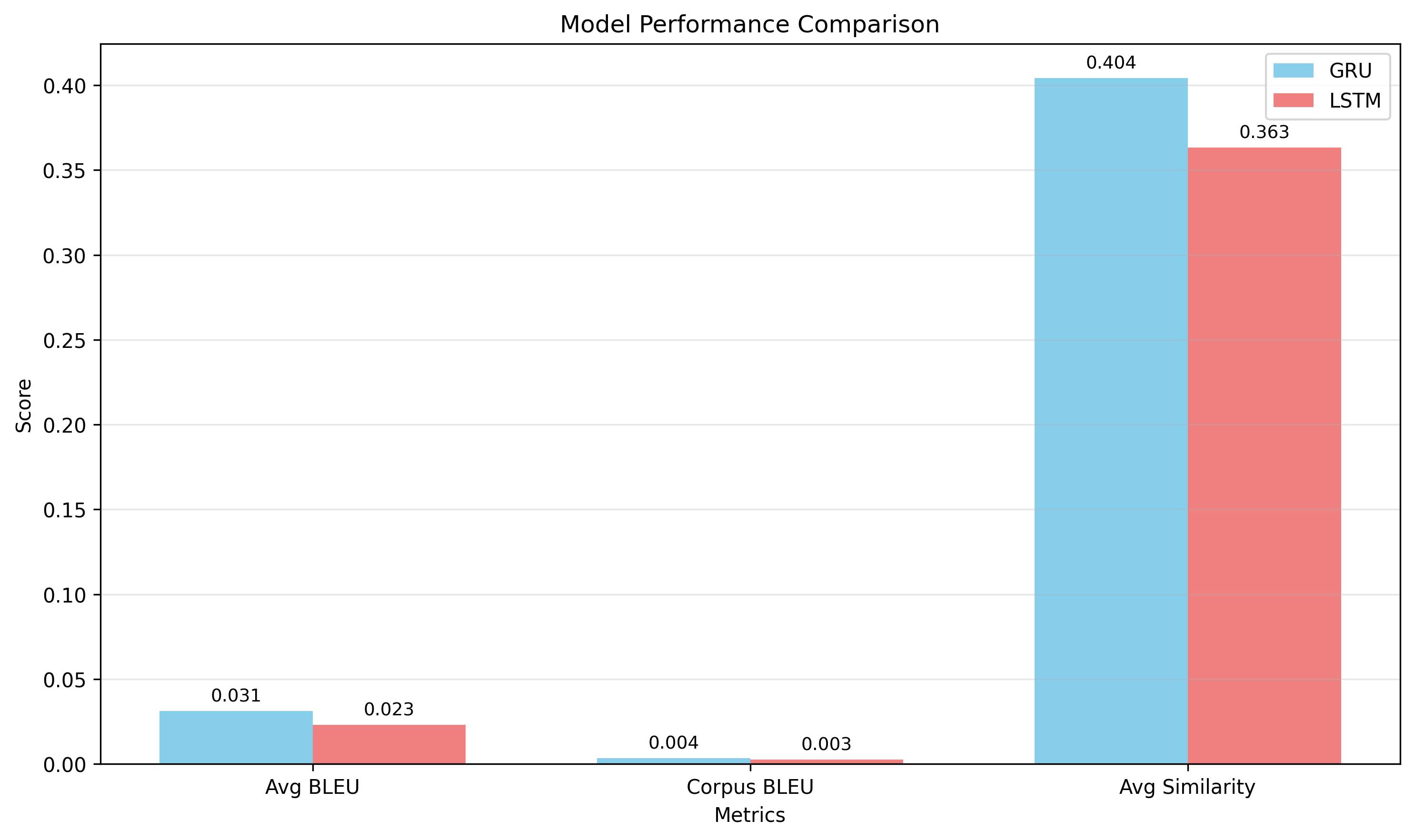
A tuned GRU beat LoRA-fine-tuned GPT-2, here's why
A 117M-parameter transformer lost to a small recurrent net on every metric. Not because transformers are bad, but because the baseline was done properly.
20 Jun 2026 Read →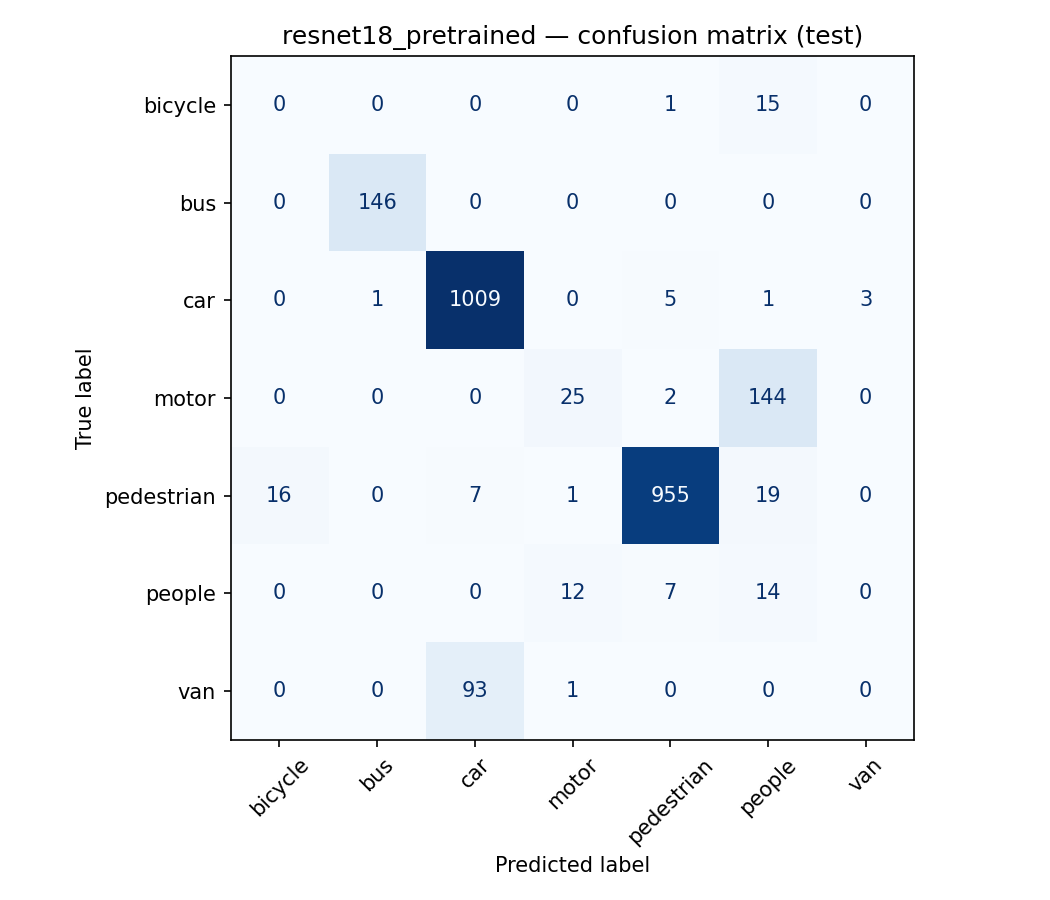
How a naïve train/test split inflated my UAV F1 by 0.5
The same model, the same data, and a macro-F1 that fell from 0.78 to 0.26 the moment I split the data honestly. A walk through the most expensive bug in ML.
12 Jun 2026 Read →